

In today’s fast-changing world, running a business is not just about starting strong – it’s about growing and improving every day. No matter how good your products or services are, if your business does not keep improving, it may fall behind. This is where the idea of continuous improvement comes in. It means making small and regular changes in your business strategy to do things better, faster, and smarter. This article explains why continuous improvement is important and how Indian businesses can benefit from it.

What is continuous improvement?
Continuous improvement is the ongoing process of looking at your business activities and finding better ways to do them. It does not always mean big changes. Even small improvements in customer service, pricing, production, or marketing can make a big difference over time.
For example, if a grocery shop owner regularly checks what items sell fast and adjusts the stock accordingly, that is a part of continuous improvement. It helps reduce waste and increases profit. This habit of making improvements step by step is useful for every type of business – from small kirana stores to large manufacturing companies.
Why continuous improvement matters in business
The business world is full of competition, and customer needs keep changing. If your business stays the same while others are improving, you may lose customers. Continuous improvement helps you stay ahead, save money, and keep your customers happy.
It also builds a strong work culture in your team. When employees see that the business is growing and open to new ideas, they feel more involved and motivated. This leads to better performance and teamwork.
Improving continuously also means fewer mistakes and better quality. Over time, this builds a good reputation, which is very important in Indian markets where word-of-mouth and trust matter a lot.
Ways to bring continuous improvement in your business
There are simple and practical ways to bring the habit of continuous improvement into your business strategy. Here are some useful methods:
Start with feedback
Listen to your customers and employees. Their feedback tells you what’s working and what’s not. A small change based on customer suggestions can increase satisfaction and loyalty. For example, if many customers ask for online payment, adding that option improves their experience.
Review your process
Look at your daily work and ask where you can save time or reduce waste. If billing takes too long or delivery gets delayed often, find out why. Even saving 10 minutes in a process can add up to big savings in the long run.
Use simple technology
You don’t need to invest in expensive software. Even using tools like WhatsApp Business, Google Sheets, or mobile billing apps can speed up work, reduce errors, and help you grow faster. These small steps in technology adoption are easy to manage and improve efficiency.
Set small goals
Don’t wait for a big plan. Set small goals every month like reducing order mistakes, improving packaging, or replying to customers faster. These short goals keep you and your team focused and help build a habit of progress.
Train your team
Teach your staff new skills regularly. A better-trained team means fewer mistakes and more confidence. For example, a staff member learning how to use Excel can manage stock or accounts better, saving you time and effort.
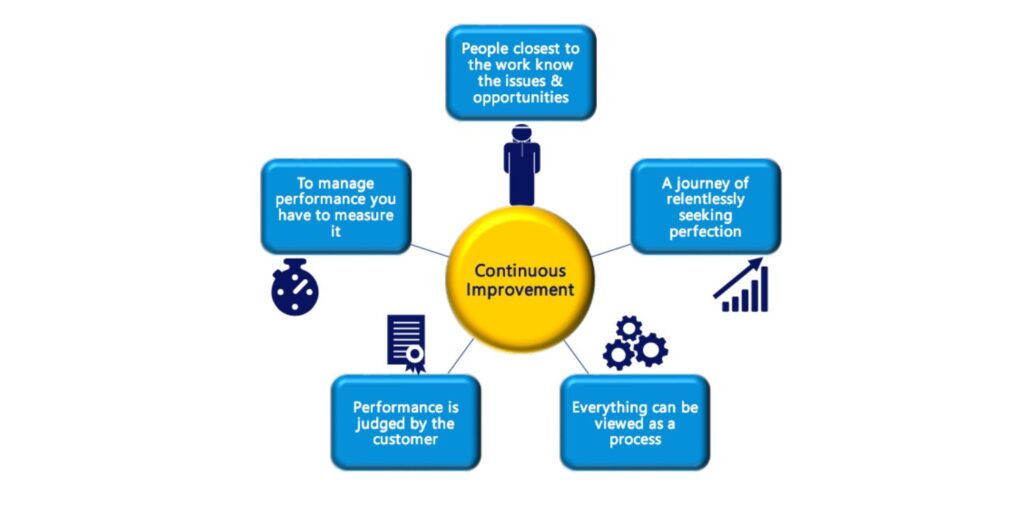
Examples of continuous improvement in Indian businesses
Many Indian businesses have grown successfully through regular improvement. A small dosa shop in Bengaluru, for example, improved service by creating a token system to handle large crowds. A tailoring business in Delhi started taking orders online and saw a rise in young customers.
Even large Indian companies like TATA, Infosys, and Amul constantly work on improving their processes, products, and customer service. Their success shows that continuous improvement is not just for big players – it can help anyone grow steadily.
Final thoughts
Continuous improvement is a smart and simple way to grow your business steadily. It doesn’t need a big budget or expert advice. All it needs is a mindset of learning, listening, and acting on small changes that can bring better results.
By listening to feedback, reviewing your work, using basic tools, and training your team, you can make your business more efficient and customer-friendly. Remember, improvement is not a one-time activity – it’s an everyday habit. And in a country like India where business is fast-moving and competitive, this habit can set you apart and take your business to new heights.
