

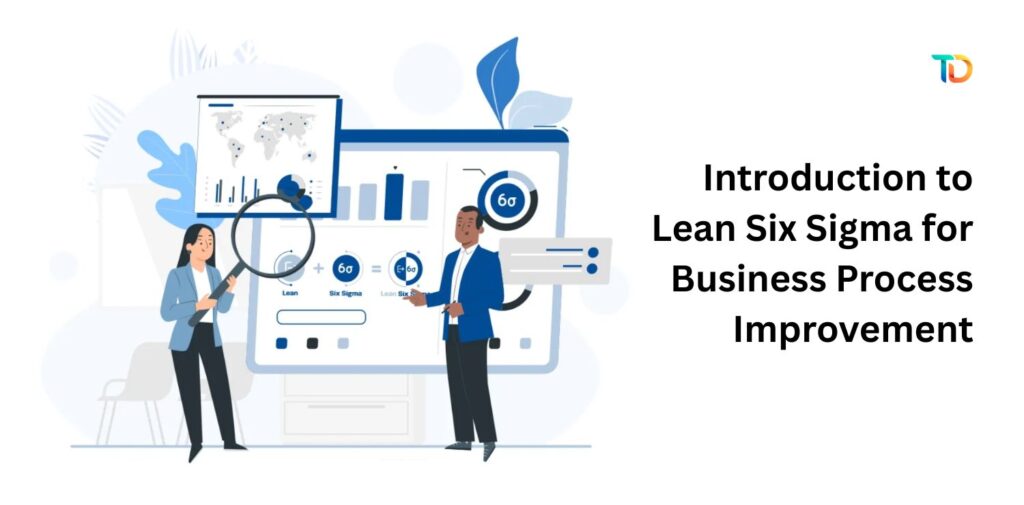
Lean Six Sigma is a powerful method used by businesses around the world to improve their processes, reduce waste, and increase customer satisfaction. In simple words, it helps companies work better, faster, and smarter. Many successful companies in India and abroad use Lean Six Sigma to stay ahead in competition and deliver better services or products.
Whether it’s a manufacturing company, a hospital, or even a bank, Lean Six Sigma can be applied everywhere. If you are a business owner, a manager, or someone looking to improve operations, understanding Lean Six Sigma can be very helpful.
What is Lean Six Sigma?
Lean and Six Sigma are two different methods that work well together. Lean focuses on reducing waste – anything that does not add value to the customer. This could be time, resources, or money being used unnecessarily. For example, if workers are waiting for materials or machines are idle, it’s a waste.
Six Sigma focuses on reducing errors and variations in the process. It uses data and analysis to find where mistakes happen and how to fix them. When Lean and Six Sigma are combined, they create a strong approach to improve quality and efficiency.
So, Lean helps to speed up the process by removing waste, and Six Sigma helps to make the process more accurate and consistent.
Why Lean Six Sigma is important for Indian businesses
In today’s competitive market, every business wants to grow and offer better products or services at a lower cost. Indian companies are no exception. Many Indian businesses face challenges like delays, high production costs, customer complaints, and low employee productivity. Lean Six Sigma helps to solve these problems by identifying the root cause and fixing them permanently.
It also improves teamwork, encourages innovation, and helps companies deliver better customer service. By applying Lean Six Sigma, Indian companies can compete not only in the local market but also at the global level.
How Lean Six Sigma works
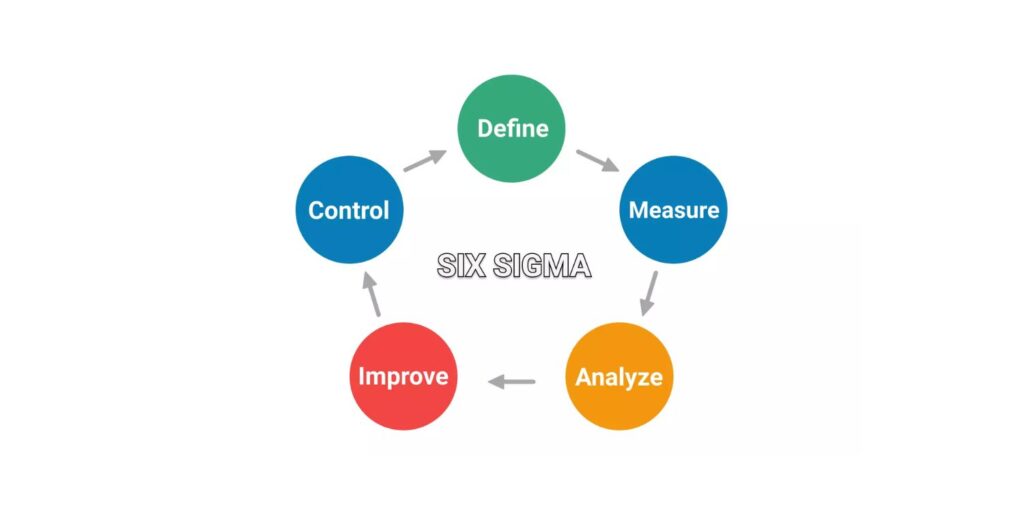
Lean Six Sigma works through a step-by-step approach known as DMAIC. It stands for Define, Measure, Analyze, Improve, and Control.
- Define: Understand the problem and what needs to be improved.
- Measure: Collect data to see how the process is currently working.
- Analyze: Find the reasons behind the problems.
- Improve: Make changes to remove the root causes.
- Control: Monitor the process to ensure the problem does not come back.
This method helps in solving problems in a structured way. It is based on facts and data, not guesswork.

Benefits of Lean Six Sigma
There are many benefits of Lean Six Sigma for any business, big or small. Some of the main advantages are:
- Better quality of products or services
- Faster delivery time
- Lower costs by reducing waste
- Higher customer satisfaction
- Improved employee involvement and motivation
- Better decision-making using data
In India, many companies like Tata Group, Reliance, Wipro, and even hospitals and government departments have successfully used Lean Six Sigma to improve their performance.
Final thoughts
Lean Six Sigma is not just for big companies. Even small businesses, startups, and service providers can use it to grow and become more efficient. It is a mindset of continuous improvement. Learning about Lean Six Sigma can also help individuals in their career growth, especially in industries like manufacturing, IT, healthcare, and finance.
In simple terms, Lean Six Sigma helps you do the right things in the right way, using less time and fewer resources. If used correctly, it can bring long-term success to any business. So, if you are looking to make your business more productive and profitable, Lean Six Sigma is definitely worth learning and applying.
